14. Electrolyte Design Enables Improved Capacity Retention of LiFePO4 Cells with Both Graphite and Silicon-Carbon Composite Anodes.
Thitiphum Sangsanit, Alexandra G Whyard, Jeffin James Abraham, Holden MacLennan, William Black, Montree Sawangphruk and Jeff Dahn.
Journal : Journal of The Electrochemical Society, 2026, 173 170516.
Journal Impact Factor: 3.5, Q2 (JCR), CiteScore : 6.0, H-index : 321.
DOI: 10.1149/1945-7111/aea0bb
Abstract : LiFePO4 (LFP) cells show lower gravimetric and volumetric energy density than other types of Li-ion cells. To improve this, a Si-containing anode is employed in LFP cells. However, LFP cells with Si–C composites in the anode show more rapid capacity loss than cells with only graphite in the anode. Lithium alkoxides produced a poorly passivated negative electrode surfaces in carbonate electrolytes travel to the positive electrode and cause Fe dissolution. This Fe moves to the negative and compromises the SEI leading to Li inventory loss and capacity fade. It is more difficult to passivate Si–C effectively in typical electrolytes due to its large volume changes. To solve this issue, we use an electrolyte, based on the solvents sulfolane and toluene, where alkoxide production is impossible and which eliminates Fe dissolution from LFP. LFP/Si–C cells with sulfolane:toluene electrolytes show excellent capacity retention, much better than cells with traditional carbonate electrolytes. Alkoxide-suppressing additives were also explored in this work, and 10% FEC in an EC-free electrolyte also showed promising results. This will open the way to employ a Si–C–containing anode in LFP cells to achieve higher gravimetric and volumetric energy density without sacrificing lifetime.

13. Atomic Layer Deposition Passivation Stabilizes NiCo2O4 Nanotubes for Light-Enhanced Bifunctional Oxygen Electrocatalysis and Rechargeable Zn–Air Batteries.
Daranphop Pikulrat, Surat Prempluem, Thitiphum Sangsanit, Teera Butburee, Kajornsak Faungnawakij, Montree Sawangphruk.
Journal : Journal of Power Sources, Volume 694, 1 December 2026, 241247.
Impact Factor : 8.4, Q1, CiteScore : 14.9 H-index : 378.
DOI: 10.1016/j.jpowsour.2026.241247
Abstract : Spinel NiCo2O4 is a promising bifunctional oxygen electrocatalyst; however, interfacial degradation limits its long-term stability. Herein, we report NiCo2O4@Al2O3 nanotube catalysts prepared by atomic layer deposition (ALD), where an ultrathin amorphous Al2O3 overlayer serves as an interfacial passivation coating that stabilizes the catalyst while preserving its electrochemical performance. Under simulated sunlight, the catalysts exhibit enhanced oxygen evolution and oxygen reduction reaction (OER/ORR) activity, demonstrating the photoresponsive nature of NiCo2O4. Rotating ring–disk electrode (RRDE) measurements reveal a dominant four-electron ORR pathway with suppressed peroxide formation. Complementary in-situ transmission X-ray diffraction (Mo Kα) shows reversible structural evolution during electrochemical operation, with lattice contraction during OER and minimal structural changes during ORR, confirming the robustness of the spinel framework. Compared with pristine NiCo2O4, the ALD-passivated catalyst exhibits markedly improved electrochemical durability while maintaining comparable catalytic activity. A proof-of-concept rechargeable Zn–air battery further demonstrates its practical feasibility. This work establishes ALD surface passivation as an effective strategy for stabilizing NiCo2O4 electrocatalysts and provides new insights into the structure–stability relationships governing durable bifunctional oxygen electrocatalysis.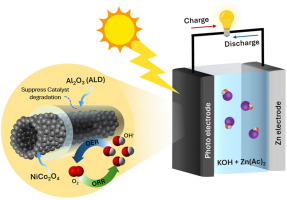

12. Degradation mechanisms in large-scale Ni-rich Li-ion batteries under elevated voltage and temperature: A comparison of single-crystalline and polycrystalline NMC80.
Surat Prempluem, Nattanon Joraleechanchai, Sukritta Janprakhon, Techin Mamiamuang, Worapol Tejangkura, Montree Sawangphruk.
Journal : Journal of Power Sources, Volume 687, 30 September 2026, 240588.
Impact Factor : 8.4, Q1, CiteScore : 14.9, H-index : 378.
DOI: 10.1016/j.jpowsour.2026.240588
Abstract : Ni-rich layered oxide cathodes are essential for high-energy lithium-ion batteries but suffer from accelerated degradation under high-voltage and elevated-temperature operation. While microcracking and surface reactivity are both implicated in failure, their mechanistic relationship under practical cell conditions remains unclear. Here, single-crystal and polycrystalline NMC80 are systematically compared in pilot-scale 18650 jelly-roll cells to quantify how microstructure governs surface evolution and degradation kinetics. Double-layer capacitance measurements reveal pronounced, voltage-dependent surface area expansion in polycrystalline NMC80 arising from intergranular microcracking, whereas single-crystal NMC80 maintains nearly constant electrochemically active surface area. This microstructure-dependent surface evolution affects the degradation threshold: transition-metal dissolution and oxygen-driven gas evolution are detected at 4.5 V in polycrystalline cells but are delayed beyond 4.5 V in single-crystal counterparts, particularly under thermal stress. ICP-OES and DEMS analyses further demonstrate morphology-dependent dissolution chemistry. These findings establish a direct linkage between grain-boundary cracking, dynamic surface generation, and accelerated parasitic reactions in practical cylindrical cells, highlighting single-crystal design as an effective strategy to enhance high-voltage durability of Ni-rich cathodes.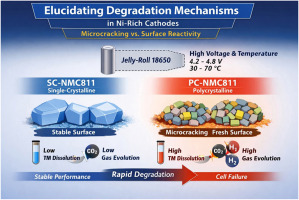
11. Electrolyte Development for LFP//Graphite Cells: Attempts to Stop Fe Dissolution from LFP.
Thitiphum Sangsanit, Alexandra G. Whyard, Meng Yue, William Black, Montree Sawangphruk and Jeff Dahn.
Journal : Journal of The Electrochemical Society.
Impact Factor : 3.5, Q1, CiteScore : 6.1, H-index : 321.
DOI: 110.1149/1945-7111/ae940a
Abstract : Iron dissolution and subsequent deposition on the negative electrode is a major issue in LiFePO4//graphite cells operated at elevated temperatures. Fe dissolution can be caused by Li-alkoxides formed during electrolyte reduction at the graphite electrode. The dissolved Fe then deposits on graphite, further accelerating additive consumption (e.g. vinylene carbonate), solid electrolyte interphase deterioration, lithium inventory loss, and causes accelerated capacity fading, especially at high temperatures. In this work, we sequentially removed the reactants responsible for Li-alkoxide formation by developing linear-carbonate-free, ethylene carbonate-free, and finally carbonate-free electrolytes to produce cells where alkoxides could not form. After this optimization process, we employed sulfolane and toluene as co-solvents in electrolytes for LFP cells, which eliminated alkoxide formation, delayed and almost completely suppressed Fe deposition on graphite even during testing at 70 °C. As well, in an EC-free electrolyte containing 10% fluoroethylene carbonate (FEC), both alkoxide formation and Fe deposition are suppressed until at least 20% capacity loss. Therefore, we propose that 10% FEC acts as an alkoxide-suppressing additive. These resulted in a stable capacity fade rate with no accelerated degradation region caused by Fe deposition on the negative electrode. We believe this approach opens a window for new electrolytes for long-lasting LFP cells.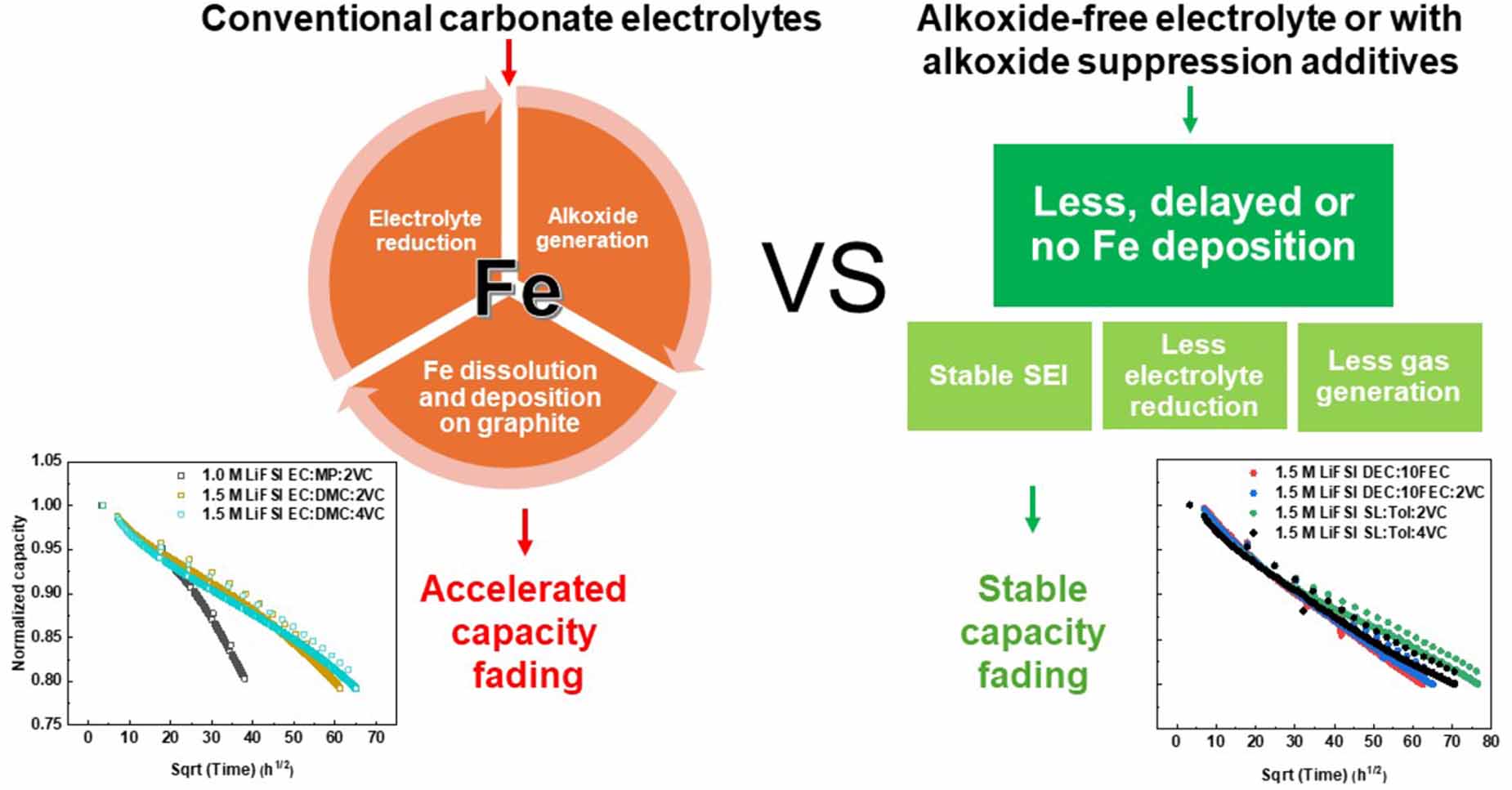
10. Azolla-derived dual-carbon sodium-ion capacitors in a water-in-salt electrolyte.
Arisa Phukhrongthung, Pachari Chuenta, Natthawut Suebsing, Pichamon Sirisinudomkit, Channarong Puchongkawarin, Montree Sawangphruk, Santamon Luanwuthi.
Journal : Results in Engineering.
Impact Factor : 9.4, Q1, CiteScore : 8.8, H-index : 79.
DOI: 10.1016/j.rineng.2026.111836
Abstract : Dual-carbon sodium-ion capacitors (SICs) are attractive because both electrodes can be produced from carbon materials with tunable structures and complementary charge-storage behaviours. In this work, Azolla biomass was used as a common precursor to prepare two functionally different carbon electrodes: activated porous carbon as the cathode (AZ_AC) and hydrothermally derived hydrochar as the anode (AZ_HC). AZ_AC exhibited a high specific surface area of 1,006 m2 g−1 and stored charge mainly through ion adsorption/desorption, whereas AZ_HC, with a specific surface area of 199.8 m2 g−1, provided suitable sites for Na+ storage owing to its disordered carbon structure and slightly expanded interlayer spacing. A 15 m NaClO4 water-in-salt electrolyte was used to enable a 2.3 V operating window. The AZ_HC//AZ_AC device delivered an energy density of 135 Wh kg−1 at a power density of 230 W kg−1, based on the total active mass of both electrodes, and retained 85.3% of its initial capacitance after 1,000cycles. These findings highlight the potential of Azolla-derived carbon materials for developing sustainable dual-carbon aqueous SICs.

9. When fluorination becomes inactive: solvation exclusion and interfacial kinetics in Ni-rich lithium-ion batteries.
Thanitsavat Sirirat, Sukritta Janprakhon, Nattanon Joraleechanchai, Surat Prempluem, Salatan Duangdangchote and Montree Sawangphruk.
Journal : Chemical Science, 2026, (Nature index).
Impact Factor : 8.1, Q1, CiteScore : 14.7, H-index : 255.
DOI: 10.1039/d6sc03512d
Abstract : Fluorinated carbonate additives are widely employed to stabilize electrolytes for high-energy lithium-ion batteries (LIBs), yet the interplay between fluorination degree, molecular geometry, and lithium-ion (Li+) solvation remains poorly understood. It is commonly assumed that increasing fluorination uniformly weakens Li+ solvation and improves interfacial stability. Here, we demonstrate that excessive fluorination—particularly in linear carbonate additives—can instead render the additives solvation-inactive through a previously unrecognized mechanism termed solvation exclusion. In this regime, highly fluorinated linear additives are expelled from the Li+ first solvation shell, leading to kinetically unfavorable interfacial processes. Using a multiscale approach integrating density functional theory, molecular dynamics simulations, multinuclear DOSY NMR, temperature-dependent electrochemical impedance spectroscopy, and long-term NMC90‖graphite full-cell testing, we systematically compare cyclic and linear fluorinated carbonates with graded fluorination. We reveal that cyclic carbonates with moderate fluorination remain active in Li+ solvation, promote controlled contact-ion-pair formation, lower charge-transfer activation energies, and form LiF-rich, mechanically robust interphases. Conversely, highly fluorinated linear additives trigger solvation exclusion, resulting in elevated activation barriers, organic-rich interphases, severe cathode cracking, and rapid capacity fading. Furthermore, galvanostatic intermittent titration measurements confirm that these performance disparities stem strictly from interfacial kinetics rather than bulk lithium diffusion. These findings establish that optimal electrolyte design requires balancing the fluorination degree and molecular geometry to preserve active solvation participation. Ultimately, this work provides fundamental insights and practical design principles for developing robust fluorinated electrolytes for Ni-rich LIBs, particularly under high-rate and low-temperature operations.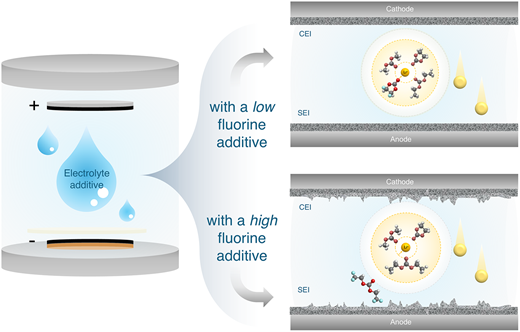
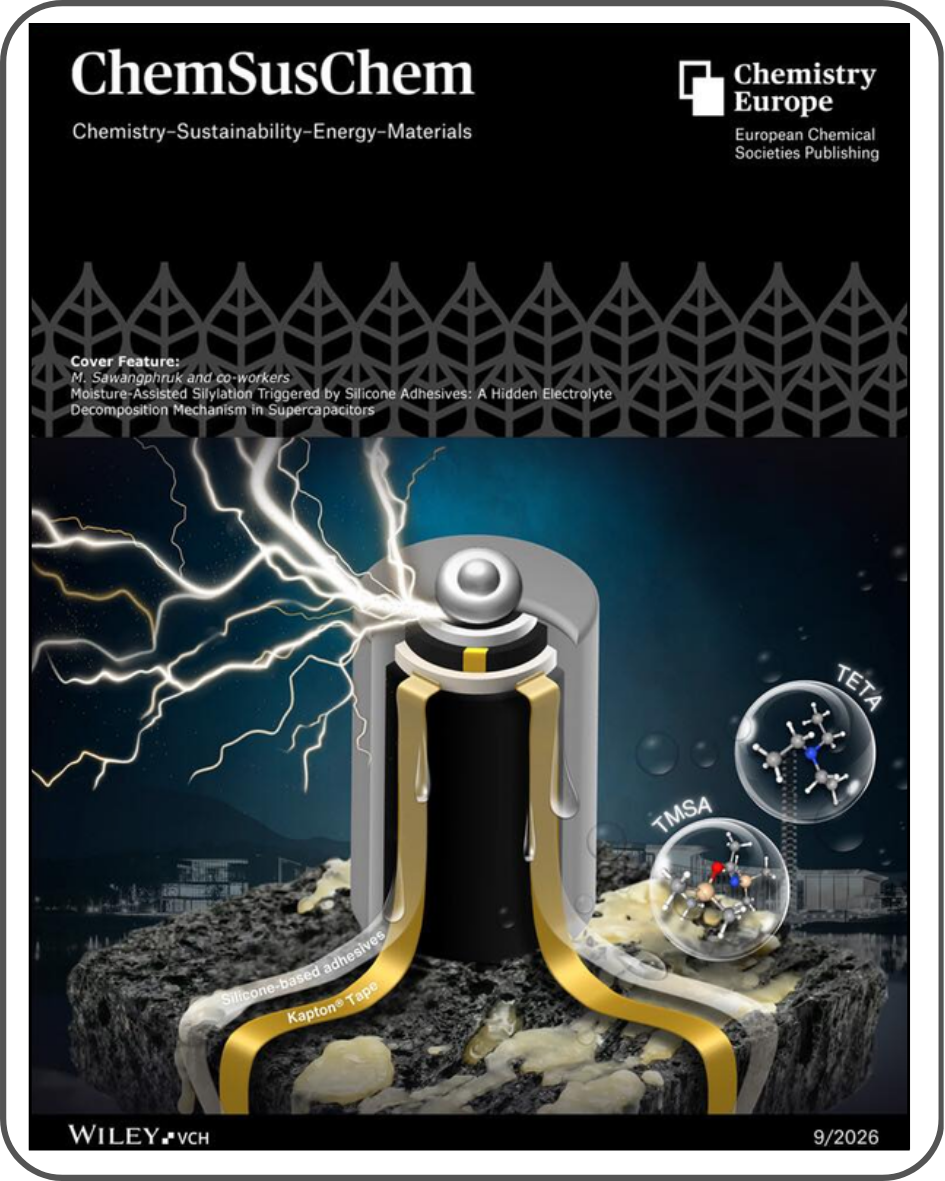
8. Moisture-Assisted Silylation Triggered by SiliconeAdhesives: A Hidden Electrolyte DecompositionMechanism in Supercapacitors.
Phatsawit Wuamprakhon, Nuttida Matkhaw, Thitiphum Sangsanit, Worapol Tejangkura, Santamon Luanwuthi, Pichamon Sirisinudomkit, Pawin Iamprasertkun, Jiaqian Qin, Montree Sawangphruk.
Journal : ChemSusChem (Chemistry Europe), 2026.
Impact Factor : 7.7, Q1, CiteScore : 15.8.
DOI: 10.1002/cssc.202501768.
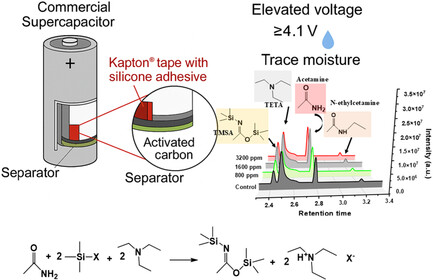
Abstract : Silicone adhesives in polyimide (Kapton) tape are revealed as hidden initiators of electrolyte decomposition in commercial-scale supercapacitors employing acetonitrile-based electrolytes. This study uncovers a previously unrecognized, moisture-assisted silylation mechanism in which silicone-derived trimethylsilyl species react with acetamide, a hydrolysis product of acetonitrile, in the presence of triethylamine (TETA), forming trimethylsilyl acetamide (TMSA) via nucleophilic substitution. This degradation pathway, activated under elevated voltage (≥4.1 V) and trace moisture, is distinct from known electrode-induced processes and accelerates electrolyte breakdown. A suite of analytical techniques, including gas chromatography–mass spectrometry (GC–MS), X-ray fluorescence (XRF), X-ray photoelectron spectroscopy (XPS), and electrochemical testing, unambiguously identifies the silicone adhesive as the primary source of reactive silicon. Control experiments confirm that TMSA formation requires both silicone adhesives and water, validating the proposed mechanism. These findings challenge the conventional assumption that non-electroactive components are chemically inert and demonstrate that auxiliary materials can drive parasitic side reactions under realistic abuse conditions. This work highlights the critical importance of full-system material compatibility screening in supercapacitor design and provides mechanistic insight for enhancing device longevity and safety.
7. Solvation-Driven Interphase Engineering and Mechanical Failure Pathways in Large-Scale Anode-Free Lithium Metal Batteries.
Nattanon Joraleechanchai, Nuttida Matkhaw, Thitiphum Sangsanit, Worapol Tejangkura and Montree Sawangphruk.
Journal : Chemical Science, 2026, (Nature index).
Impact Factor : 7.4, Q1, CiteScore : 14.1, H-index 241.
DOI: 10.1039/D6SC00025H
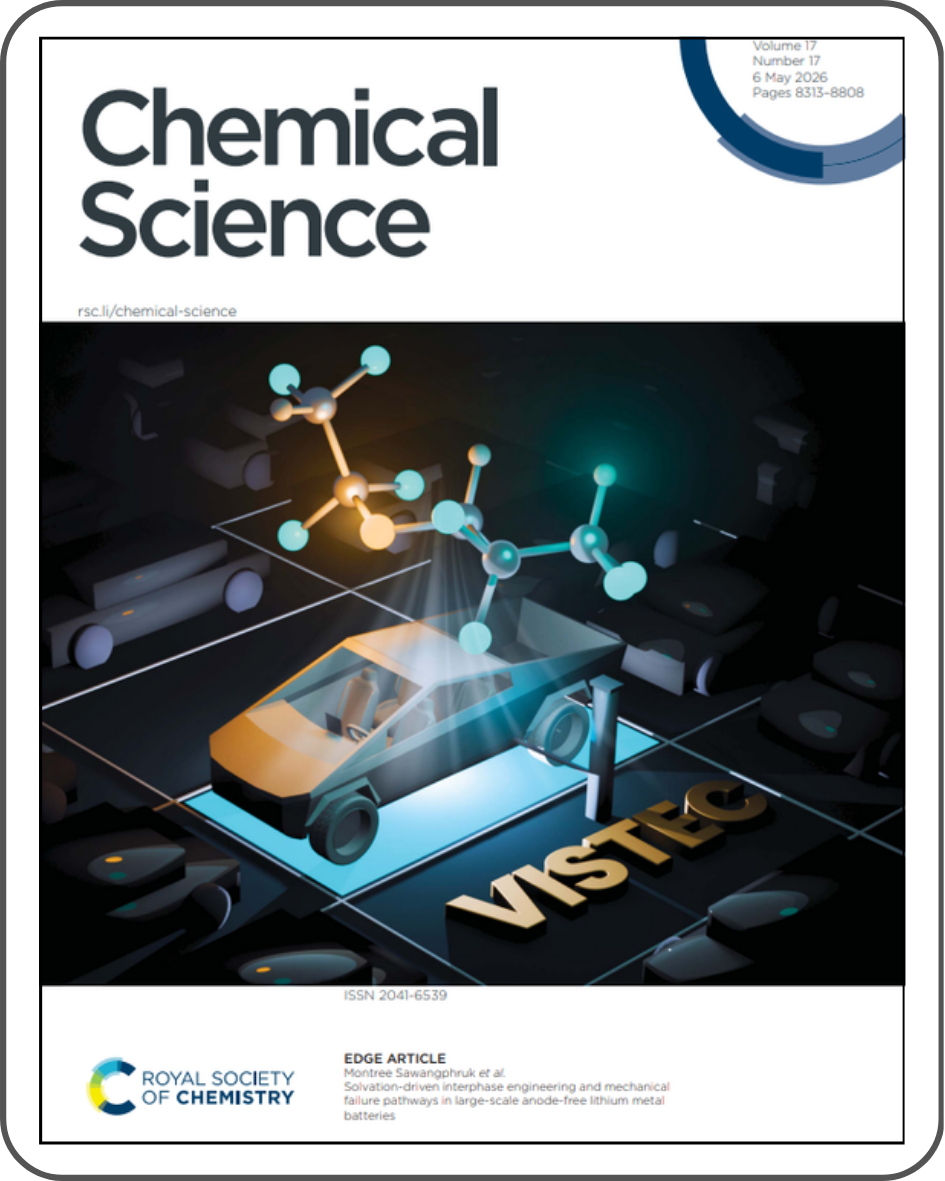
Abstract : Anode-free lithium–metal batteries promise ultrahigh energy density but remain limited by unstable interfaces and safety concerns. Here, we demonstrate that fluorinated-ether solvation chemistry directly dictates interphase formation, thermal behavior, and performance in large-format Cu‖NMC90 cells. We reveal that introducing 1,1,2,2-tetrafluoroethyl 2,2,3,3-tetrafluoropropyl ether (TTE) into a localized high-concentration electrolyte restructures the Li⁺ solvation shell into a previously unreported PF₆⁻-dominated coordination environment in practical cylindrical cells. This anion-rich solvation promotes preferential PF₆⁻ reduction and yields a dense LiF-rich solid-electrolyte interphase, as verified by nuclear magnetic resonance, X-ray photoelectron spectroscopy, and differential electrochemical mass spectrometry. The optimized electrolyte enables non-flammable behavior and high efficiency in 18650-format anode-free cells, achieving 278–308 Wh kg⁻¹ at the cell level (380–402 Wh kg⁻¹ at the jelly-roll level), nearly 100% Coulombic efficiency, and compliance with UN38.3 impact-safety standards. Importantly, we identify lithium-plating-induced mechanical expansion—not interfacial instability—as the dominant failure pathway, establishing a direct link between molecular solvation structure and macroscopic structural integrity. These findings define solvation-driven interphase engineering as a practical route toward safe, high-energy anode-free lithium–metal batteries.
6. Fate of Tungsten-Coated NMC Cathodes in Li-Ion Cells.
Animesh Dutta, Kan Homlamai, Jeffin James Abraham, Thitiphum Sangsanit, Andrew O’Brien, Yixiang Zhang, Michel Johnson, Eytan Mendel-Elias, Montree Sawangphruk, JR Dahn.
Journal : ACS Energy Letters, 2026.
Impact Factor : 18.9, Q1, CiteScore : 29.6, H-index 223.
DOI: 10.1021/acsenergylett.6c00321
Abstract : To achieve high energy density in medium-nickel-layered oxide (NMC) cathodes, the most straightforward approach is to increase the upper cutoff voltage. However, this reduces the cycle life due to enhanced electrolyte oxidation. Many coating elements have been introduced to improve the lifetime, and tungsten (W) is a common vendor choice. We find that surface tungsten compounds dissolve during electrochemical cycling, with the rate increasing at higher cutoff voltages. X-ray photoelectron spectroscopy (XPS) confirms W deposition in the form of metallic W and tungsten oxides on the graphite negative electrode, and X-ray fluorescence (XRF) quantified W content. Surprisingly, a significant amount of W dissolves under high-voltage operation, a problem that becomes more severe because vendors generally employ only trace amounts of coating, which leaves the surface increasingly exposed as the coatings dissolve. This work also investigates the impact of deposited W on the lithiated graphite negative electrode through simulated storage experiments.

5. NaF-rich solid-electrolyte interphase formation stabilizes hard-carbon anodes in sodium-ion capacitors.
Phatsawit Wuamprakhon, Nuttida Matkhaw, Thitiphum Sangsanit, Worapol Tejangkura, Montree Sawangphruk
Journal : Chemical Engineering Journal, 2026.
Impact Factor : 13.2, Q1, CiteScore : 20.6, H-index 337.
DOI: 10.1016/j.cej.2026.173980
Abstract : Designing a stable and ionically conductive solid–electrolyte interphase (SEI) remains a central challenge for sodium-ion capacitors (SICs), where device performance is governed by interfacial transport kinetics rather than capacity retention alone. While fluorinated electrolyte additives are known to stabilize hard-carbon (HC) anodes in sodium-ion batteries, their kinetic consequences under the asymmetric architecture and high-rate operation of SICs remain poorly quantified. Here, we investigate the role of electrolyte additives in tailoring the SEI on HC anodes in SICs and establish a quantitative relationship between interphase chemistry, Na+ transport kinetics, and device-level performance. X-ray photoelectron spectroscopy depth profiling reveals that fluoroethylene carbonate (FEC) and a 1,3-propane sultone derivative (DTD) promote the formation of thin, NaF-rich inner SEI layers, whereas vinylene carbonate (VC), tris(trimethylsilyl) phosphite (TTE), and additive-free electrolytes yield thicker, organic-dominated interphases. Temperature-dependent electrochemical impedance spectroscopy and Arrhenius analysis demonstrate that FEC- and DTD-derived SEIs exhibit markedly reduced interfacial resistance growth and lower activation energies for Na+ transport compared to organic-rich SEIs. These kinetic advantages suppress parasitic electrolyte decomposition while minimizing polarization under capacitor-relevant operating conditions, leading to enhanced rate capability and long-term cycling stability. By correlating SEI composition, thickness, and Na+ transport activation barriers, this work clarifies why SEI chemistries that are chemically stable in sodium-ion batteries do not necessarily ensure optimal performance in SICs. Guided by these insights, optimized AC‖HC full cells with a 2:1 AC:HC mass ratio and pre-sodiated HC deliver ∼97.5% capacity retention after 400 cycles at 0.25 A g−1 with excellent rate performance. This study establishes kinetic-based design principles for SEI engineering in SICs and provides a framework for translating interfacial chemistry into performance-relevant metrics in high-rate sodium-based energy storage systems.

4. Enhancing The Performance of Medium Nickel Cathodes via Controlled Cobalt Rich Surface Coating.
Kan Homlamai, Animesh Dutta, Artem M Abakumov, Maria Kirsanova, Montree Sawangphruk, Yang Yu, Jeff R Dahn.
Journal : Journal of The Electrochemical Society, 2026, 173, 050509.
Impact Factor : 3.3, Q1, CiteScore : 6.1, H-index 321.
DOI : 10.1149/1945-7111/ae489a.
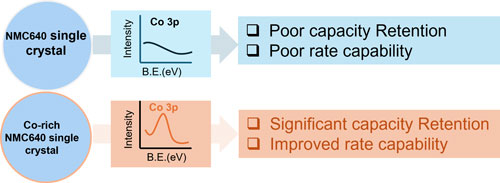
Abstract : Medium-nickel layered oxide (NMC) materials are widely adopted by cell manufacturers, as they provide higher energy density without compromising safety at high voltage. However, challenges such as poor rate capability and limited lifetime at higher cutoff voltages still hinder their broader application. Our analysis of vendor materials revealed that, among the multiple additives used to enhance performance, cobalt is also employed as a surface coating element by some vendors. This study demonstrates a simple process to achieve a cobalt-rich surface on the NMC cathode via an all-dry synthesis method, verified by X-ray Photoelectron Spectroscopy (XPS). Our Co-coated NMC samples achieve performance close to that of top-tier vendor samples that incorporate multiple coating additives. Transmission electron microscopy (TEM) further confirms the incorporation of cobalt on the surface of single-crystal Li1+x(Ni0.6Mn0.4)1-xO2. This work highlights the importance of a cobalt-rich surface, showing that minimal cobalt addition can significantly improve electrochemical performance at high cutoff voltages without requiring numerous additives.

3. Interfacial and Structural Transformations in Ni-Rich Cathodes: A Roadmap Toward Chemical Stability.
Surasak Kaenket, Techin Mamiamuang, Nattanon Joraleechanchai, Jirawat Limphrasittisak, Purin Krapong, Worapol Tejangkura, Montree Sawangphruk.
Journal : Chemical Communications, 2026, (Nature index).
Impact Factor : 4.3, Q1 (87th), CiteScore : 10.2, H-index 387.
DOI : 10.1039/d5cc06328k.
Abstract : This review highlights Ni-rich layered oxide cathodes, such as LiNixMnγCozO2 (NMC) and LiNixCoyAlzO2 (NCA), where x ≥ 0.6, y + z ≤ 0.4, and x + y + z = 1, which have become the cornerstone of high-energy lithium-ion batteries due to their high specific capacities (>200 mA h g−1), reduced cobalt dependence, and compatibility with both cylindrical and pouch-cell formats. However, as Ni content exceeds 80%, these materials suffer from coupled chemical and mechanical degradation—cation disorder, oxygen loss, and interfacial instability—that limits lifetime and safety. This feature article presents a comprehensive roadmap linking the mechanistic origins of degradation to scalable mitigation strategies, bridging fundamental insights and technology readiness level (TRL) 9 implementation. At the lattice level, antisite defects (Ni2+/Li+ mixing) and anisotropic H2–H3 phase transitions generate microstrain and intergranular cracking, which are effectively mitigated through bulk doping (e.g., W6+, Ti4+, Zr4+, Sc3+), co-doping, and single-crystal or columnar morphologies that distribute internal stress. At the electronic level, excessive delithiation triggers oxygen redox and lattice-oxygen release, initiating chemomechanical collapse and surface rock-salt reconstruction. Countermeasures include oxygen-constraining coatings, Li2NiO2 prelithiation, and redox-buffering additives (e.g., LiFePO4 blending). At the interface, parasitic reactions with carbonate electrolytes produce resistive cathode–electrolyte interphases (CEIs) and gas evolution. Stabilization is achieved via fluorine-rich electrolytes, hybrid compartmentalized systems, and MOF-functionalized separators, which suppress HF formation and transition-metal dissolution. The article further highlights emerging manufacturing-compatible solutions—including solvent-free mechanofusion coatings, spatial atomic layer deposition, facing-target sputtering, and wet-chemical nanoshell growth—that integrate surface and bulk stabilization. These approaches not only improve high-voltage cycling (>4.5 V) but also meet industrial scalability and sustainability goals through direct regeneration and closed-loop cathode recycling. By unifying lattice, oxygen, and interfacial stabilization into a coherent framework, this roadmap provides actionable guidance for designing next-generation Ni-rich cathodes that achieve long-term durability, high safety, and industrial manufacturability for the global electrification era.
2. Graphene in energy harvesting devices.
Montree Sawangphruk.
Graphene: Synthesis, Properties, Technology and Applications, 2026, 157-183.
Abstract : This chapter provides a comprehensive role of graphene in energy-harvesting devices, covering its integration into various technologies and applications. Starting with the introduction of graphene and its exceptional properties, this book delves into its potential in enhancing photovoltaic cells by improving efficiency and performance through the use of transparent graphene electrodes as well as in heterojunction and organic solar cells. The book then examined the role of graphene in supercapacitors, highlighting its contribution to increased energy density, faster charge/discharge rates, and enhanced durability. Employing graphene in lithium-ion batteries is also discussed, emphasizing its potential to improve the capacity, charge times, and overall performance through innovative anode and cathode materials. Thermoelectric devices benefit from graphene’s superior thermal and electrical conductivities, with applications in waste heat recovery and power generation. Graphene-enhanced piezoelectric and triboelectric devices have been explored, demonstrating their ability to efficiently harvest mechanical energy. Real-world applications and case studies illustrate the practical impact of graphene-based energy solutions from wearable electronics to renewable energy systems. The book addresses the challenges of large-scale integration, material compatibility, and environmental sustainability and outlines future research directions focusing on material innovation and scalable production techniques. Finally, the book highlights the potential global impact of graphene-based energy-harvesting devices on energy efficiency, renewable energy integration, and green society.
1. Decoupling Oxygen Redox from O₂ Release in Li-and Mn-Rich Layered Cathodes: Mechanisms, Metrics, and Design Rules.
Techin Mamiamuang and Montree Sawangphruk.
Journal : Journal of Materials Chemistry A, 2026.
Impact Factor : 9.5, Q1, CiteScore : 16.7, H-index 318.
DOI : 10.1039/D5TA07671D.
Abstract : Lithium- and manganese-rich (LMR) layered oxides can deliver >250 mAh g⁻¹ by engaging anionic (oxygen) redox, yet their promise is undermined when oxygen redox couples to O₂ formation, triggering transition-metal migration, layered→spinel/rock-salt reconstruction, interfacial breakdown, and voltage fade. This review reframes LMR development around a single objective—decouple reversible oxygen redox from O₂ release—and organizes the field into mechanisms, metrics, and design rules. We first clarify the mechanistic pathways that produce oxidized-oxygen species versus molecular O₂ and map how these pathways propagate stress, porosity/voids, and interfacial reactivity. We then define a decision-grade metric set to distinguish O-redox from O₂ evolution under practical conditions, including gas quantification at realistic cutoffs (≥4.5 V), operando O-species fingerprints (e.g., RIXS/¹⁷O probes), proxies for transition-metal migration, and tracking of microstructural change (voids, reconstruction, impedance growth). Finally, we translate diagnostics into actionable design rules spanning (i) bulk/composition (Mn-valence control, Li/TM ordering, concentration gradients, high-entropy chemistries), (ii) architecture and interfaces (primary-particle coatings; thin, Li⁺-conductive, acid-scavenging layers; oxygen-tolerant CEIs), and (iii) electrolytes (fluorinated and localized-high-concentration systems with targeted additives). Emerging concepts—dynamic oxygen buffers, self-regenerating interphases, and solid/gel interlayers—are assessed against application-relevant benchmarks (areal loading, temperature, gas evolution, N/P balancing, scalable synthesis). We conclude with prioritized experiments and go/no-go criteria to accelerate durable, high-voltage LMR commercialization.
